
You know you haven't been feeling like yourself lately.
Maybe you're more irritable than usual. You're anxious for reasons you can't explain, overwhelmed by things that never used to bother you, or feeling disconnected from the people around you.
Someone asks what's wrong, and you genuinely don't know what to tell them.
You're not necessarily thinking about something that happened in your past. You don't have a specific memory you want to work through. You just know something doesn't feel right.
And when you try to explain it, the words don't seem to match what you're actually experiencing.
What if you didn't have to find the right words to start working through what you're feeling?
That's one of the reasons Brainspotting therapy may be worth exploring.
Brainspotting offers a way to pay attention to emotions, physical sensations, and experiences that aren't always easy to explain through conversation alone.
What Is Brainspotting Therapy?
Brainspotting is a type of therapy that helps people explore and process difficult emotions, overwhelming experiences, and reactions that aren't always easy to understand or explain.
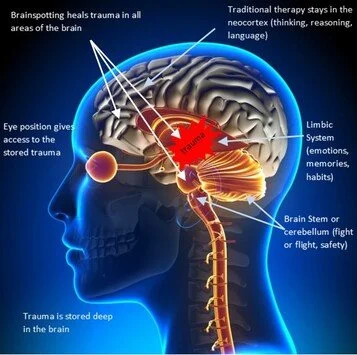
Developed by psychologist Dr. David Grand in 2003, Brainspotting uses specific eye positions to help you focus on emotional and physical experiences.
The idea behind Brainspotting is that where you look may influence how you connect with certain feelings, memories, and physical sensations.
During a session, your therapist helps you find an eye position, called a brainspot, that seems connected to what you're experiencing.
From there, you're encouraged to notice whatever comes up, whether that's an emotion, a physical sensation, a memory, or even something you can't quite identify.
The difference is that you don't have to know exactly what you're feeling or why you're feeling it before you begin.
Brainspotting gives you an opportunity to explore those experiences without needing to explain everything out loud.
What If You Don't Know What's Wrong?
One of the most frustrating feelings is knowing something isn't right but not being able to figure out what it is.
Maybe you've noticed yourself becoming more withdrawn. You don't have the energy to socialize, you're easily irritated, or you're struggling to enjoy things that used to make you happy.
You might find yourself:
Feeling anxious without knowing what's making you anxious.
Getting overwhelmed by small things that never used to bother you.
Shutting down during difficult conversations.
Feeling disconnected from your emotions or the people around you.
Struggling to explain why you're upset, frustrated, or uncomfortable.
Feeling tense or on edge even when everything seems fine.
Knowing you don't feel like yourself but having no idea where to start.
Sometimes these experiences are connected to stress, past experiences, or emotions you've learned to push aside.
Other times, the reason isn't immediately clear.
And that can make reaching out for help feel intimidating.
You might think you need to identify the problem before you can talk to a therapist.
But you don't have to understand exactly what's happening to deserve support.
Brainspotting can be one way to begin exploring what you're experiencing, even when you don't have the words to describe it.
Why Is It Sometimes So Hard to Explain How You Feel?
Not everyone has an easy time identifying or talking about emotions.
Maybe you grew up in an environment where feelings weren't discussed. You learned to keep things to yourself, push through difficult situations, or avoid showing when something bothered you.
Or maybe you've spent so much time focusing on work, responsibilities, and other people's needs that you rarely stop to notice how you're actually feeling.
Over time, it can become difficult to recognize what you're experiencing emotionally.
Instead, you might notice it physically.
Your chest feels tight before a social event. Your stomach drops when someone seems upset with you. Your shoulders tense when you're overwhelmed, or you feel completely exhausted after a difficult conversation.
You might not know exactly why you're having those reactions.
But you're experiencing them nonetheless.
Brainspotting focuses on noticing these emotional and physical responses rather than relying entirely on verbal explanations.
That can be particularly appealing if you've struggled to describe your feelings in traditional talk therapy.
How Does Brainspotting Therapy Work?
If you've never heard of Brainspotting, the process might sound a little unusual.
But you don't need to understand the science behind it or prepare anything specific before your first session.
Your therapist will guide you through the process at a pace that feels comfortable.
1. We start with what you're experiencing.
You don't need a detailed explanation of what's wrong.
Maybe you feel anxious, disconnected, overwhelmed, or simply unlike yourself.
That's enough of a starting point.
2. We notice what comes up.
Your therapist may ask you to pay attention to what happens when you focus on a particular feeling or situation.
You might notice tension in your chest, a knot in your stomach, or a sense of discomfort you can't quite describe.
3. We identify a brainspot.
Your therapist helps you find an eye position that seems connected to what you're noticing.
This often involves following a pointer with your eyes until you identify a position that feels significant.
4. We give you space to process.
While maintaining that eye position, you'll be encouraged to notice whatever thoughts, emotions, memories, or physical sensations arise.
You might have a lot to say, or you might prefer to remain quiet.
Your therapist will check in with you, provide support, and help you stay grounded throughout the process.
There's no right or wrong way to experience a Brainspotting session.
Do You Have to Talk During Brainspotting?
No, not the entire time.
One of the things that makes Brainspotting different from traditional talk therapy is that it doesn't require you to verbally explain every thought, feeling, or experience as it comes up.
Maybe you've tried therapy before but struggled when someone asked, "How does that make you feel?"
You know you're feeling something. You just can't find the words.
Or maybe you've spent years talking about your experiences, but you still notice yourself becoming overwhelmed, anxious, or emotionally shut down in certain situations.
Brainspotting offers another way to explore those experiences.
You can share what you're noticing when you want to, but you don't have to narrate everything happening internally.
And if you prefer talking through your experiences, that's okay too.
Brainspotting can be incorporated into traditional talk therapy, allowing you and your therapist to use different approaches depending on what you need.
Can Brainspotting Help With Anxiety and Social Anxiety?
Brainspotting is sometimes used by therapists working with people who experience anxiety, including social anxiety.
Maybe you feel uncomfortable around people but can't explain why.
You replay conversations afterward, worry about being judged, or avoid situations where you might have to speak up.
Even when you know there's no real reason to feel embarrassed or afraid, your body reacts anyway.
You might notice your heart racing, your mind going blank, or an overwhelming urge to leave.
For some people, these reactions may be connected to past experiences of criticism, rejection, embarrassment, or feeling unsafe around others.
For others, the connection isn't obvious.
Brainspotting may offer an opportunity to explore the feelings and physical responses associated with these situations.
While some people report benefits, research on Brainspotting for anxiety and social anxiety is still limited. Established treatments, including cognitive behavioral therapy, have stronger evidence, and your therapist can help you explore which approach is most appropriate.
Is Brainspotting Only for Trauma?
No. Although Brainspotting was developed as a trauma-focused approach, therapists also use it with people experiencing other emotional challenges.
You don't need to have experienced a major traumatic event or even identify with the word trauma to explore Brainspotting.
People may seek Brainspotting therapy for concerns such as:
Anxiety and overthinking: Feeling constantly worried, tense, or unable to relax.
Social anxiety: Feeling uncomfortable around others, fearing judgment, or struggling with confidence.
Emotional disconnection: Having difficulty identifying feelings or feeling emotionally numb.
Stress and overwhelm: Feeling like even small responsibilities are becoming too much.
Low self-esteem: Constantly doubting yourself or feeling like you're not good enough.
Past experiences: Recognizing that difficult relationships or experiences may still be affecting you.
Substance use concerns: Wanting to better understand the emotions or experiences that contribute to using alcohol or substances to cope.
It's important to understand that Brainspotting is still an emerging therapeutic approach. Although preliminary research and clinical reports suggest potential benefits, more rigorous studies are needed to establish how effective it is for different concerns.
What If You've Already Tried Talk Therapy?
Maybe you've been in therapy before.
You've talked about your childhood, your relationships, your anxiety, and the things that bother you.
You've gained insight into your patterns and understand yourself better than you used to.
But something still feels unresolved.
Or maybe talk therapy has been difficult because you don't know what to say.
You sit down for a session, your therapist asks what's been going on, and suddenly you can't think of anything.
Even though you know you've been struggling all week.
Brainspotting can offer another way to approach therapy when finding the right words feels difficult.
Rather than focusing entirely on explaining what's happening, you can spend time noticing what you're experiencing internally.
This doesn't mean Brainspotting is better than talk therapy or that talking about your experiences isn't valuable.
For many people, combining different therapeutic approaches can be helpful.
Can Brainspotting Therapy Be Done Online?
Yes. Brainspotting can be adapted for virtual therapy sessions.
During online Brainspotting, your therapist can help you identify an eye position and guide you through noticing your thoughts, emotions, and physical sensations.
You'll need a private space where you feel comfortable, a reliable internet connection, and a device that allows you to see your therapist.
Your therapist will help determine whether virtual Brainspotting is appropriate for your needs and discuss ways to stay comfortable and grounded throughout the session.
At Ever Mei Therapy Collective, we offer virtual Brainspotting therapy to adults throughout Oregon, including Bend, Portland, Eugene, and surrounding communities.
Brainspotting Therapy in Oregon at Ever Mei Therapy Collective
You don't have to wait until you can perfectly explain what's wrong to ask for help.
Maybe you're tired of feeling anxious without knowing why. Maybe you're struggling to connect with the people around you, feeling overwhelmed by everyday responsibilities, or simply noticing that you haven't felt like yourself in a long time.
You might not have a specific event you want to work through.
You might not even know what you want to change yet.
You just know you don't want to keep feeling this way.
At Ever Mei Therapy Collective, we offer virtual Brainspotting therapy for adults throughout Oregon who are struggling with anxiety, trauma, emotional overwhelm, and feeling disconnected from themselves.
We understand that not everyone finds it easy to talk about their emotions, and you don't have to have the right words before starting therapy.
Our approach is collaborative and supportive, giving you space to explore what you're experiencing at a pace that works for you.
If you're curious about whether Brainspotting therapy might be a good fit, we'd love to help you explore your options.
Learn more about our Therapist, Tom Gulick, who specializes in Brainspotting HERE.
